


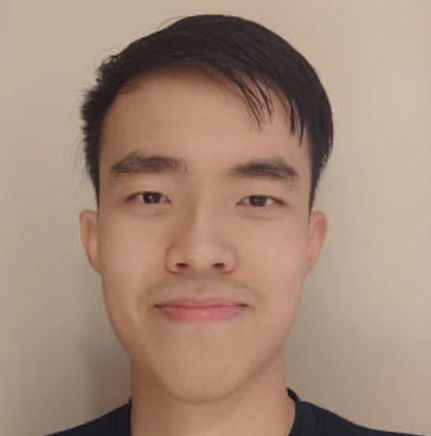






Tanmay Debnath
Tanmay started out as a Mechanical Engineer as an undergrad at IIITDM Jabalpur, India and then went on to pursue a Master’s degree in Engineering at Toyohashi University of Technology, Japan. As an engineer, he is fascinated by modern technology, especially AI, which eventually led him to the Roslin Institute. His current PhD project involves working with the James Prendergast lab on developing AI models that can help us annotate livestock genomes better, without having to carry out large-scale sequencing experiments. It is titled: Disentangling the mammalian regulatory code using deep learning.

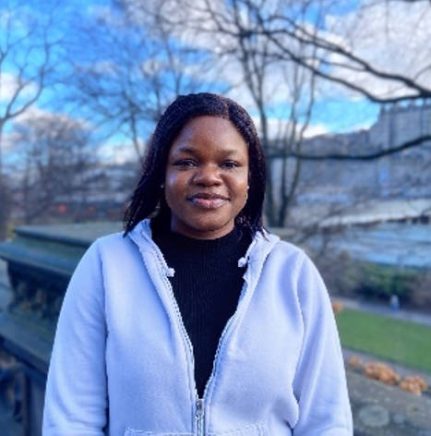
Maia Beeson
Maia grew up in Fife, Scotland and graduated with a BSc in Molecular Biology from the University of St Andrews in 2023. She has always been interested in all things viral, so her current research project excites and inspires her every day. Her project looks into further elucidating the mechanisms of influenza A virus whilst determining the potential of CpG enrichment as a live attenuated vaccine augmentation strategy.
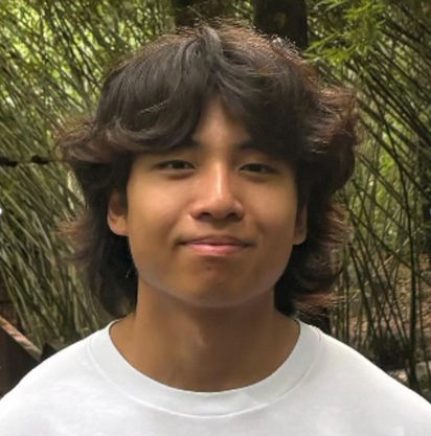
Max Hately
Max, originally from York, earned a BSc in Biomedical Sciences from Cardiff University, where he developed an interest in bacterial pathogens and infectious diseases. After graduating in 2021, he worked on the Cardiff University WeWASH project, a wastewater-based epidemiology initiative monitoring SARS-CoV-2 during the pandemic. In 2023, Max completed an MRes in Biosciences at Cardiff, focusing on assessing the ability of attaching and effacing enteric pathogens to subvert mitochondrial dynamics of host cells during infection. his project focuses on Mode of action of lymphostatin, a novel lymphocyte inhibitory factor of pathogenic Escherichia coli, where he aims to shed light on its molecular mechanisms and confirm lymphocyte inhibitory activity occurs in vivo.
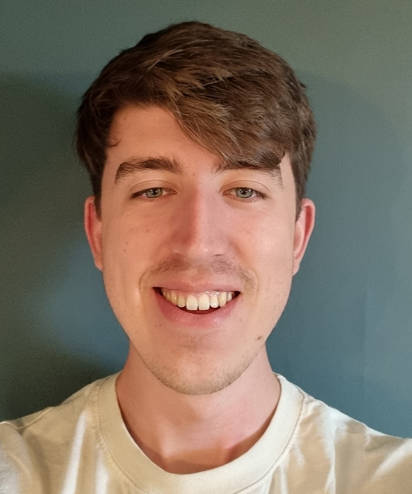
Jefferson Ling
Jefferson completed a Biomedical Sciences undergraduate degree at Newcastle University before pursuing a MRes in Drug Design at UCL. During his masters’ research project he found his love for studying host-pathogen interactions using 3D organoid models. After his masters, he worked as an advanced research assistant validating a human iPSC intestinal organoid model to investigate cholera toxin intoxication at the Wellcome Sanger Institute. His current PhD project involves developing an in vitro model of necrotic enteritis that will hopefully allow the testing of novel intervention strategies such as different feed additives in a high-throughput manner.

2024 Cohort
Dinaer Yekefenhazi
Dinaer obtained her bachelor’s degree from South-Central Minzu University, majoring in Information Management and Information Systems. During her master’s studies at Jimei University, she was introduced to bioinformatics and developed a strong interest in the field. After earning her master’s degree, she worked as a research assistant at Jimei University, where she continued expanding on her master’s project. During this time, she developed the idea of pursuing a PhD. Her current doctoral research focuses on unravelling the genetic basis of trypanosome infection tolerance in African cattle.
 Louise Adamson
Louise earned a BSc Hons in Development, Regeneration and Stem cells from the University of Edinburgh in 2022, and an MScR in Clinical Veterinary Sciences the following year, where she worked on reprogramming stem cells from domestic animals. After her masters Louise worked at the Scottish Centre for Regenerative medicine in a group researching the development of human blood stem cells. Her interest in cell fate decisions lead her to undertake her current PhD project with Dr James Glover, where she is Investigating the formation and patterning of cartilaginous elements during vertebrate embryonic development.

Tijesunimi Ojo
Tijesunimi is from Nigeria and has a background in Animal Nutrition and Biotechnology from Ladoke Akintola University of Technology (LAUTECH), Ogbomoso, Nigeria. After her bachelor’s, she was awarded the Erasmus Mundus scholarship to pursue a joint master’s degree in animal Breeding and Genetics (EMABG) from Wageningen University and Research (WUR), Wageningen, The Netherlands, and BOKU University, Vienna, Austria. Her research at WUR sparked an interest in the concept of ‘Breeding for Increased Resilience’. This interest was fuelled by the various challenges dairy cows face, including diseases, extreme weather conditions, limited resources, among others. These issues threaten the normal functioning of dairy cows over their lifetimes, and it is anticipated that they become more frequent and intense in the years ahead. She is a first-year PhD student at the Roslin Institute. Her PhD research project, ‘Breeding Dairy Cows for Increased Resilience and Health,’ under the supervision of Prof Andrea Doeschl-Wilson and Drs Martin Johnsson and Tomas Klingström from the Swedish University of Agricultural Sciences (SLU) and utilises automated data of cattle production, health and fertility records to develop novel resilience phenotype for breeding. “The project offers me an opportunity to continue making meaningful contributions to the rapidly growing field of resilience breeding. Through this work, I aim to achieve the global sustainability goal of developing highly productive dairy cows with improved resilience and health.”

Triza Tonui
Triza completed her bachelor’s degree in biomedical science before pursuing a Master’s in Molecular Biology at Jomo Kenyatta University of Agriculture & Technology, in collaboration with the International Livestock Research Institute (ILRI). Her master’s research focused on exploring gene expression profiles during the developmental stages of Theileria parva, the parasite responsible for East Coast Fever (ECF), a disease affecting cattle. Thereafter, she contributed to a collaborative research project involving Pennsylvania State University, the Nelson Mandela Institute of Science and Technology, and ILRI, which investigated the food safety implications of bushmeat consumption in the Serengeti and its surrounding ecosystems. Currently, she is pursuing her PhD at Roslin Institute under Dr Tim Connelley, focusing on Understanding host-pathogen interactions to develop improved vaccines against East Coast Fever (ECF).
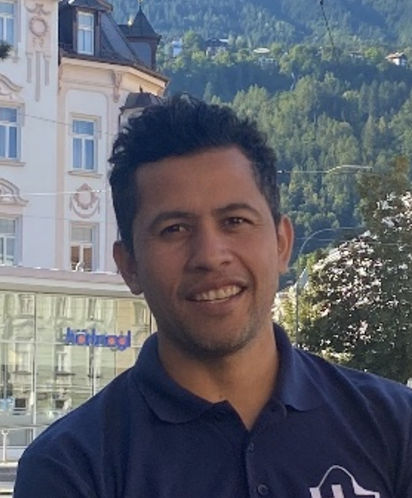
Jaime Ortiz
Jaime is an Animal Scientist from Columbia with a strong interest in statistical methods for optimising breeding programs, managing genetic diversity, and designing mate allocation strategies. He completed his master’s degree in Germany where his thesis focused on the Short-term Impact of Optimal Contribution Selection in Pigs. During his studies, he completed an internship at the Roslin Institute’s Highlander Lab, evaluating the impact of uncertainty in estimated breeding values on optimal contribution selection. He is currently pursuing a PhD, focusing on Genetic changes to improve the long-term sustainability of Norwegian Red dairy cattle. His research aims to improve genetic sustainability of dairy cattle.
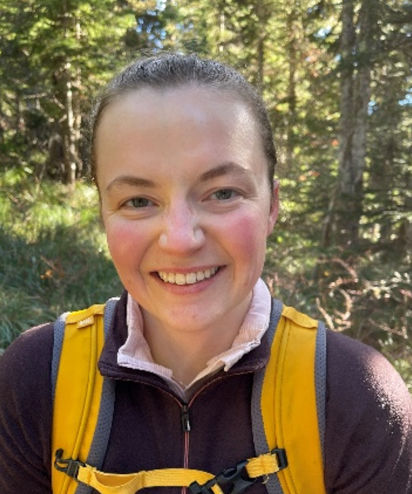
Brianna Banting
Evolution following whole genome duplication – a comparative investigation of plant and animal genomes
Brianna is a PhD student in the Macqueen group at the Roslin Institute. Her project focuses on comparing evolutionary outcomes of whole genome duplication across the tree of life. She is investigating the rediploidisation process in diatoms, plants, and animals. She has an undergraduate degree in Biology and Biochemistry from the University of Maryland and an MSc from the University of Edinburgh. For her MSc she studied introgression and speciation in a group of Scottish montane willows, developing skills in population genetics and bioinformatics. She then worked for Forest Research, focusing on quantitative genetics. transitioning to working on plant-microbe symbioses at Washington State University, returning to bioinformatics and statistics. She is thrilled to be back in Edinburgh as a student at the Roslin Institute.

King To Chan
Integrating machine learning with genomics to elucidate complex livestock traits
King To grew up in Hong Kong and earned his bachelor’s degree in Zoology from the University of Leeds, followed by his master’s degree in quantitative Genetics and Genome Analysis at the University of Edinburgh. During his MSc, he developed a strong interest in the quantitative approaches used to study genes and how they influence animal traits. His passion for animal genetics and bioinformatics led him to pursue a PhD in the Roslin Institute with Dr Musa Hassan, where he is incorporating ribosome profiling with genotyping to more efficiently identify causal genes. His project, entitled Integrating machine learning with genomics to elucidate complex livestock traits, addresses a key challenge in association studies: the difficulty of pinpointing functionally relevant variants, as many are found in non-coding regulatory regions with only indirect effects on the function of proteins.
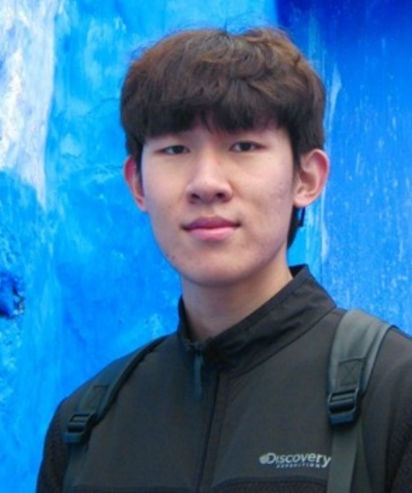
Junxiu Gao
Computational statistics and modelling to enhance salmon health and robustness
Junxiu completed a BSc in Statistics at Beijing Normal–Hong Kong Baptist University and an MSc in Statistics with Data Science at the University of Edinburgh. During his master’s, he developed an interest in using statistical tools to study gene expression in the fungal pathogen, which inspired his passion for applying statistics to understand genetics and biology. His PhD project entitled Computational statistics and modelling to enhance salmon health and robustness explores how genetic and environmental factors influence the health and resilience of farmed Atlantic salmon. By developing models to identify fish that thrive in Scottish farming conditions, his work aims to support sustainable salmon production and improve the wellbeing of farmed fish.
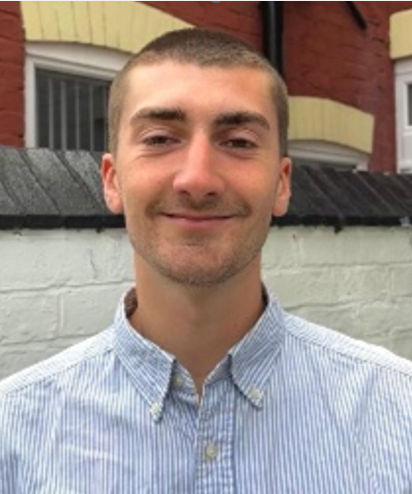
Kieran Simpkins
Assessing the Economic Impact of Low-Input Farming Practices on Farm-Level Profitability and Ecosystem Function
Kieran grew up in the countryside of Wiltshire, surrounded by farms and nature, before moving to Liverpool. He completed a BSc in Biological Sciences, followed by an MSc in Sustainable Food Systems. After his master’s degree, Kieran spent two years working with the Global Burden of Animal Diseases (GBADs) programme, contributing to systems-level analyses of livestock production, risk, and productivity. During this time, he worked on the One Food project and supported links with the Global Burden of Crop Loss (GBCL) initiative at CABI. His PhD research, under the primary supervision of Prof Jonathan Rushton, is centred on an integrated framework linking soil health, ecosystem function, and farm input costs. The project examines how ecological dysfunction can drive dependence on external inputs and explores practical interventions to restore system function while improving profitability. The research is conducted in partnership with Syngenta’s Product Safety team within the Soil Health Fund.
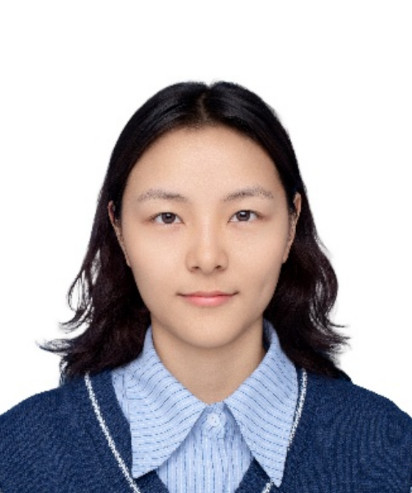
Mingzhen Jiang
Constructing simplified microbial communities to understand fibre fermentation in the chicken gut microbiota.
Mingzhen obtained her Bachelor’s degree from Chengdu University of Traditional Chinese Medicine and her Master’s degree in Veterinary Medicine from Foshan University. During her master’s studies, she focused on microbiota-based biological detoxification strategies to help animals combat environmental toxins, which sparked a strong interest in the interactions between the gut microbiota and the host, particularly through bioinformatics-based approaches. This interest motivated her to pursue a PhD, and her doctoral project aims to construct and characterise synthetic, simplified microbial communities to modulate the gut microbiota of chickens and enhance their fibre fermentation capacity, ultimately contributing to the sustainable development of the poultry industry.